Citizen guide

Know Your Digital Rights

Technology can track, identify, and store information about you. This guide makes the big questions understandable through real people and everyday situations.

Real-life examples. Plain answers. Practical tools.

Start exploring →
Same rights. A more complex world.
Where You GoLocation & ALPR
Who You AreBiometrics
What You Do OnlineData & metadata
AI & DecisionsAutomated systems
Government TechnologyVendors & accountability
Protect & UnderstandPractical tools

Real life. Real examples.

See why digital rights matter.

Each story starts with an ordinary situation. Open the legal connection only when you want to go deeper.

This explains a published framework and proposed legislation — not enacted law.
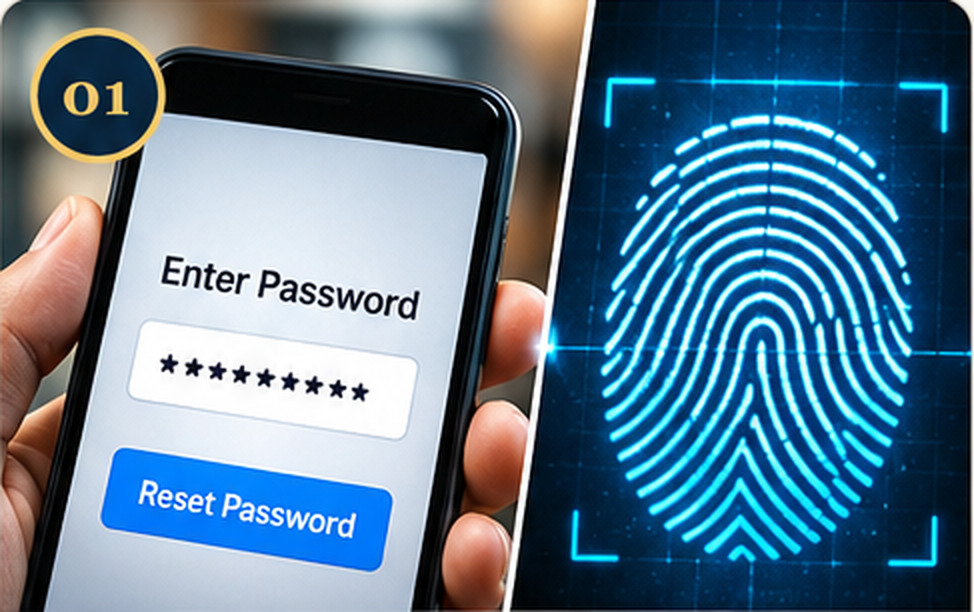
Password reset screen beside a fingerprint graphic01
Biometrics

Passwords vs. biometrics

A password can be changed. Your body cannot.

If a hacker steals your password, you reset it. If biometric information tied to your fingerprint, face, voice, iris, or gait is compromised, you cannot simply issue yourself a new body.

Connect it to the proposal

The published framework treats biometric identifiers as highly sensitive and includes biological and behavioral identifiers, plus derived templates, embeddings, and vectors used for identification or persistent recognition.


SC Bill of Digital Rights · Article X
Vehicle passing a license-plate camera with a sequence of location observations02
Location & surveillance

A day in data

One point says little. A pattern can tell a story.

Repeated location or license-plate observations can reveal where you live, work, worship, seek medical care, meet people, and spend your time.

Connect it to the proposal

The framework distinguishes isolated observations from persistent or aggregated histories. The proposed Act considers duration, precision, continuity, persistence, retrospective capability, aggregation, and what the combined information reveals.

Articles IV & IX · Proposed Act § [--30]
Online activity represented by a laptop and digital service icons03
AI & automated decisions

When a computer decision affects real life

Human review must mean real human judgment.

When an automated system affects an important government decision, a person must independently review the decision—not merely click “approve.”

Connect it to the proposal

The proposed Act calls for independent human review for covered automated decisions affecting substantial legal interests. Mere approval, acknowledgment, transmission, execution, or confirmation would not qualify.

Article VII · Proposed Act § [--60]
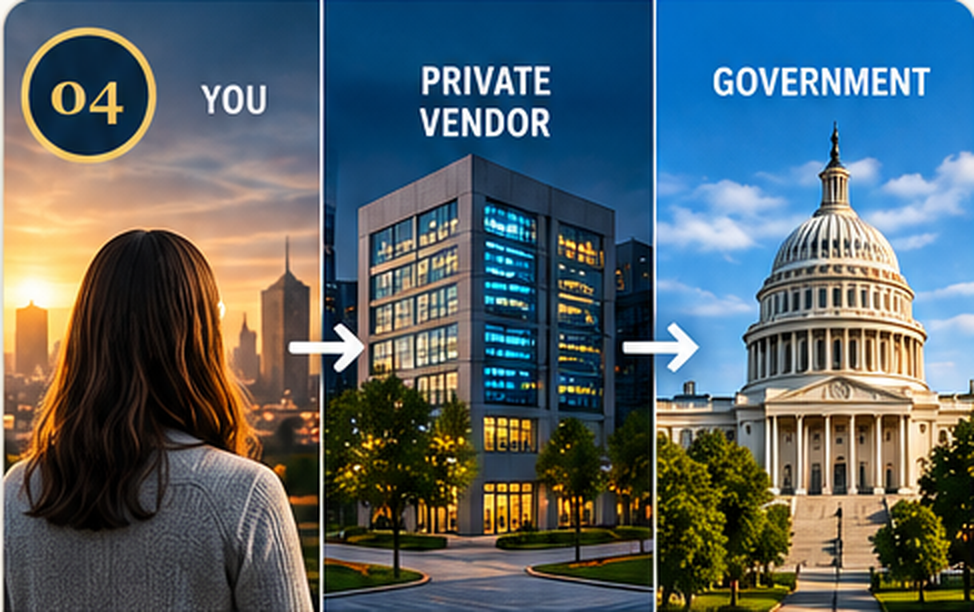
Person, private vendor, and government shown as a three-part accountability chain04
Government by proxy

Who is accountable when a private company sits in the middle?

Government cannot outsource its accountability.

Government may use private vendors, contractors, data brokers, cloud systems, and shared platforms—but outsourcing the technology should not allow government to escape the legal and constitutional limits that govern its actions.

Connect it to the proposal

The proposed Act addresses government acquisition by proxy and preserves lawful access to records needed for oversight. Contracts, hosting arrangements, and proprietary systems should not become barriers to lawful accountability, while legitimate trade-secret and security information can still be protected from unnecessary public disclosure.

Proposed Act · Government by Proxy · Contracts & Oversight
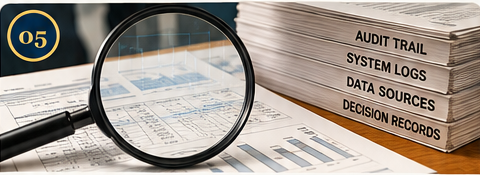
Audit trail and system records examined with a magnifying glass05
Auditability

Who looked? Why? Was it legal?

Without a trail, accountability becomes “trust us.”

If someone searches protected information, reliable records can show who did it, when, why, what was returned, and what happened next.

Connect it to the proposal

Covered high-consequence systems would preserve audit evidence for material access, use, disclosures, administration, configuration changes, remote access, errors, security events, and required human review.

Proposed Act § [--90]
Reviewer independently checking a high-consequence technology result against separate records06
High-consequence technology

When government technology matters, it needs an independent check

A system should not be allowed to prove itself right.

When a technology produces an important result that can affect a person, government should have a way to verify that material result independently of the system—and independently of the same failure that could have produced an error.

Connect it to the proposal

The proposed Act says a high-consequence system cannot be the sole nonverifiable authoritative evidence of its own material output. Certification, vendor testing, procurement acceptance, or a technical standard alone would not automatically count as independent verification.

Proposed Act § [--80]
Physical file folders labeled 2023, 2024, 2025, and 202607
Data retention

How long is your information kept?

Easy to store does not mean necessary to keep.

Information collected for one lawful reason can remain in a system long after the original purpose has ended, increasing the risk of misuse or mission creep.

Connect it to the proposal

The proposal limits collection, generation, retention, use, and dissemination to what is reasonably necessary and proportionate, while preserving records when another legal duty requires it.

Proposed Act § [--140]
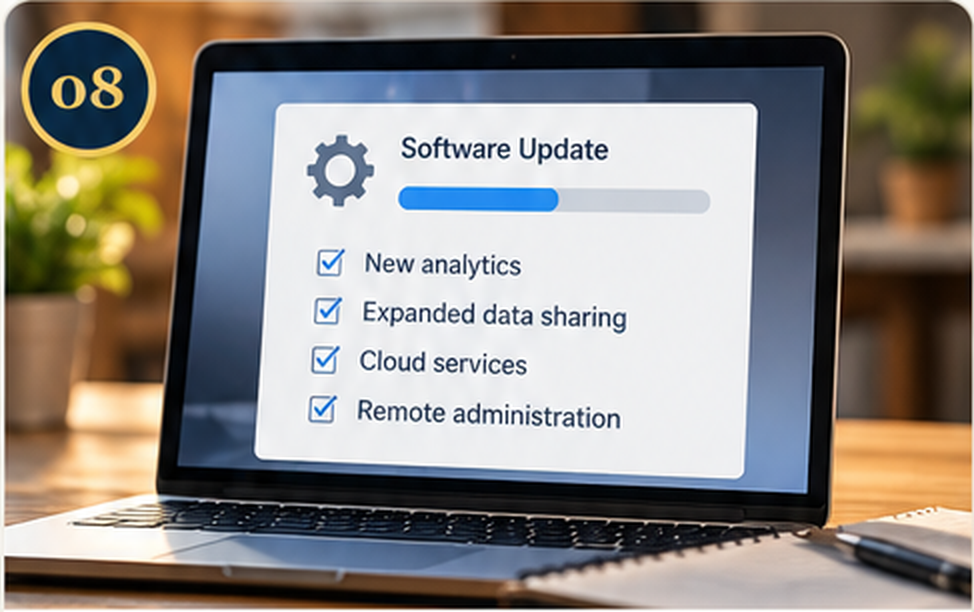
Laptop software update showing newly added system capabilities08
Technology change

The system government bought may not stay the same

Software can gain new powers after purchase.

Updates can add analytics, new data sources, cloud services, remote administration, subcontractors, interoperability, or other capabilities.

Connect it to the proposal

The proposal addresses material changes through impact-assessment and procurement provisions, including analytical functions, data categories, sharing, remote administration, update authority, vendors, subprocessors, and material operational dependencies.

Proposed Act §§ [--70], [--100]

Tools & resources

Learn it. See it. Use it.

This will become the public resource shelf: plain-language guides, reusable infographics, short explainer videos, and practical transparency tools.

Know Your
Digital Rights
Citizen Guide

Citizen Guide

A downloadable plain-language companion to the website.

In development

Infographics

Visual graphics for education, presentations, and sharing.

Library coming soon
▶

Short Explainer Videos

Fast visual explanations of one digital-rights issue at a time.

In development

Transparency Toolkit

Questions and checklists for understanding government technology.

In development

Want the legal language?

The Citizen Guide is the doorway—not the source text.

When exact wording matters, go to the published South Carolina framework, proposed Act, and research materials.